
Apple Drugs; It Was Always A Pharmacy. History of 376 Kingston Ave
By Crown Heights historian Shmully Blesofsky.
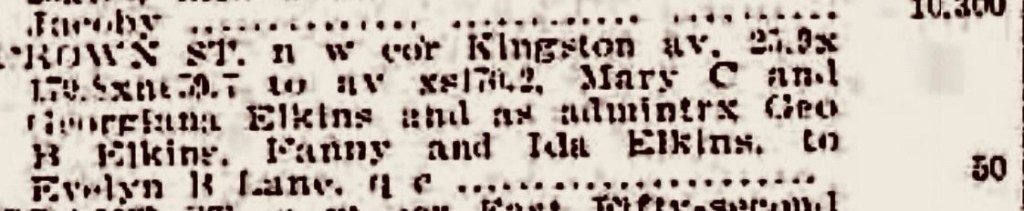
The land on which our beloved neighborhood pharmacy, Apple Drugs, now stands was once part of the J. Spader estate. The first recorded mention of this property dates back to a real estate transfer in 1872, as documented in the Brooklyn Eagle.


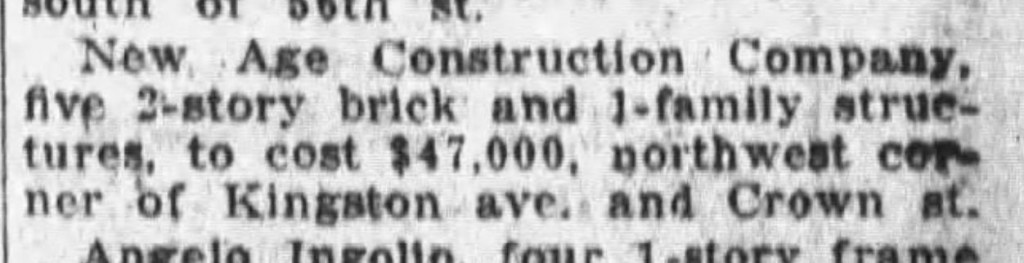
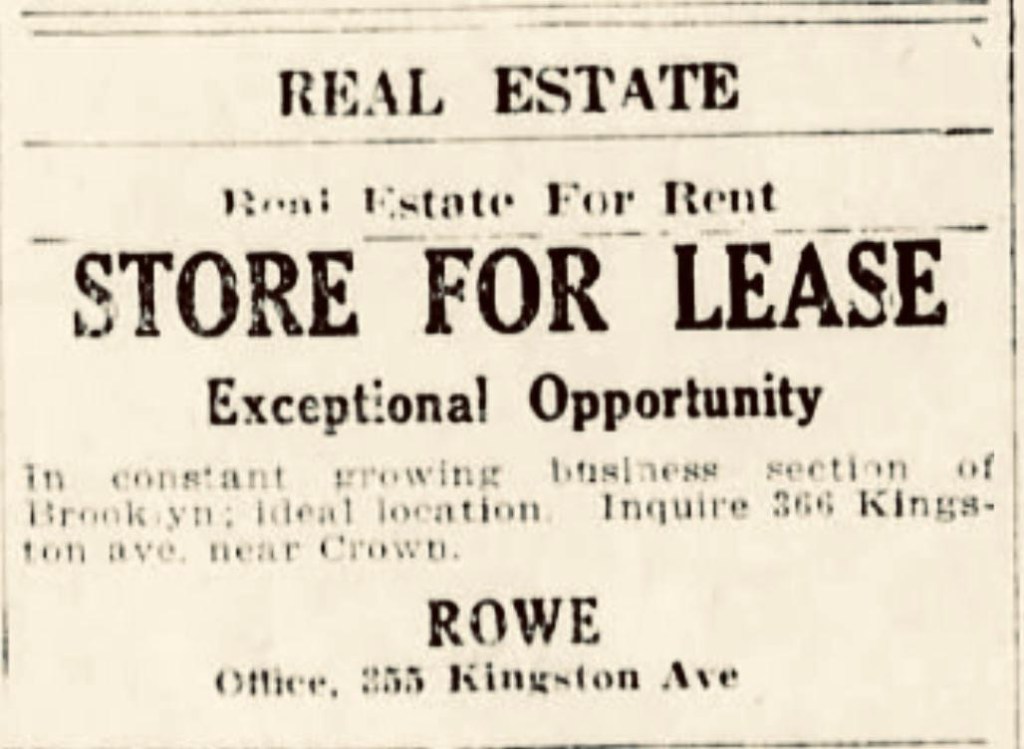
The building was constructed in 1921 by the New Age Construction Company at a cost of $47,000. They employed Julian Rowe, a brother of Frederick Rowe, as their realtor to rent out the stores. Julian Rowe had an office where Fishel Brownstein’s eyeglass store is located today. Rowe advertised these stores for rent. It is unclear whether the addition was part of the original construction or added later.
Crown Pharmacy- Davis Pharmacy
The building’s first tenant was Crown Pharmacy, owned by Mr. Julius J. Smith. In 1927, a shocking crime occurred next door, in what is now Dr. Plaut’s office. Irving Goldman, a 56-year-old man, was shot and killed during a robbery at his delicatessen next door. The criminals stole just $50. Around the same time, another shooting occurred across the avenue at the candy store that is now Hamaifitz and at another local pharmacy where a policeman was shot and killed. This seems to be odd for the neighborhood as crime was not rampant back then, let alone shootings and for such a low amount of money. As a result there was a crackdown by police and the shootings stopped.

By 1929, the pharmacy transitioned to become part of the Davis Drug Store chain. Davis Drug Store was ahead of its time, offering quick service delivery and telephone ordering. Customers would call the store using a candlestick telephone and speak in a commanding voice, “Hello, operator, give me Slocum 5796.” (According to unconfirmed historical accounts, the customer might have first heard, “Hello, Davis, please hold,” and only after providing their date of birth, being put further back on hold, and only then would they receive assistance.) In June of that year, the store suffered a robbery, during which a 400-pound safe containing $500 (equivalent to over $9,252 today) was stolen. The Marvin Fruchter of 1932 was a man by the name of Max Frank Goldman. Unfortunately, Goldman passed away at just 47.
Kowitt Pharmacy
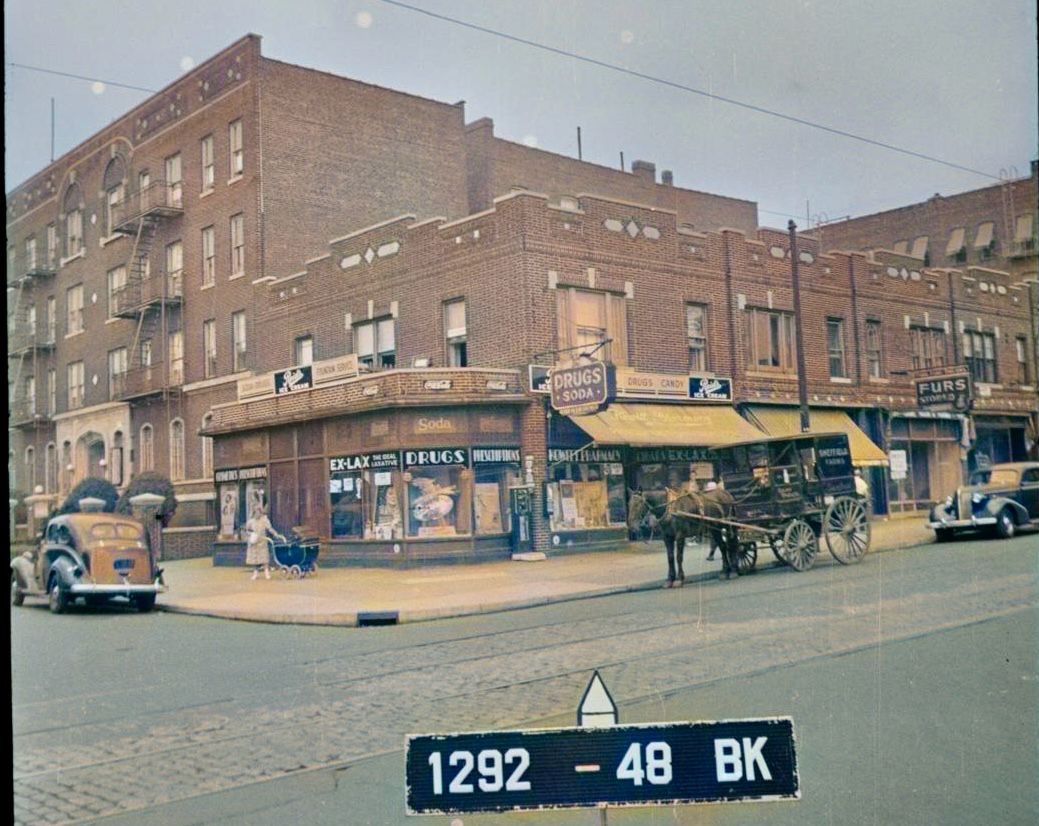
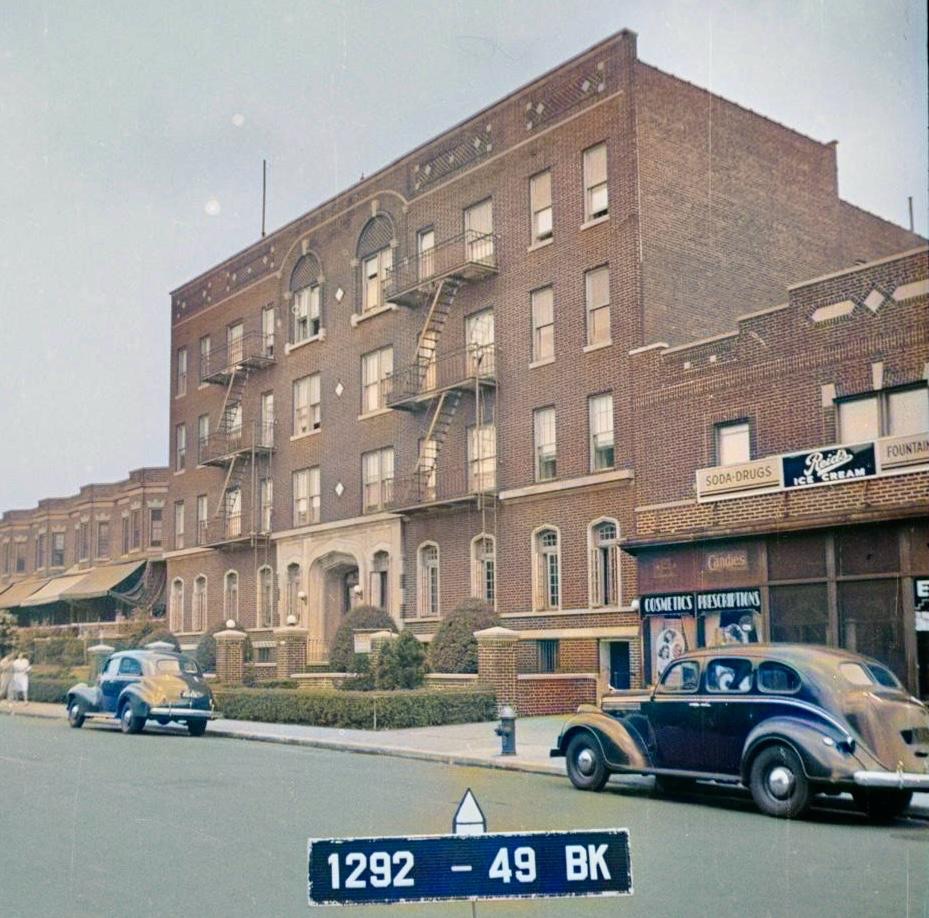
The one-story brick add-on to the Pharmacy was originally a soda fountain store with a view of Crown Street. This soda fountain operated until 1950, after which it was rented out to an optometrist for several years. In the photo, the horse and buggy appear to be delivering farm goods.
Owned by brothers William and Harry Kowitt, Kowitt Pharmacy replaced Davis Drug Store. The Kowitt family’s original surname was Itzkowitz, and they were second cousins to Eddie Cantor. The family lived in Crown Heights from the early 1930s until they sold the pharmacy in 1957.
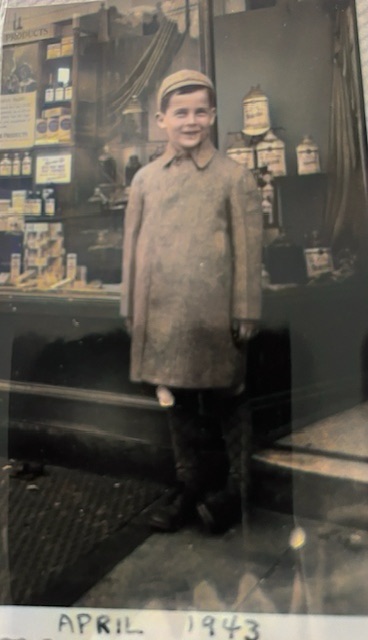
William’s son, Stanley Kowitt, was born in Crown Heights in 1938 and currently resides in Boca Raton, Florida. He lived at 1324 Carroll Street and recalls playing hide-and-seek on every block and sports in the streets, dodging cars as they passed. Stanley remembers when houses on Crown Street were being converted into shuls and described Crown Heights as a friendly and safe neighborhood. He attended PS 161. As a child, Stanley delivered prescriptions for his father and could earn tips of up to 10 cents.
Brooklyn Daily Eagle, August 6, 1934. Notice of William Kowitt gave a chattel mortgage to Crown Heights Pharmacy, which was doing business as Davis Drug Store. He purchased the drug store soon after.
The addition to the pharmacy included a soda fountain that sold ice cream sodas and small items. It was typical of that era for pharmacies to have a soda fountain. The fountain featured a long counter along the store where customers could sit and overlook Crown Street. Later, the soda fountain area was rented out to an optometrist.

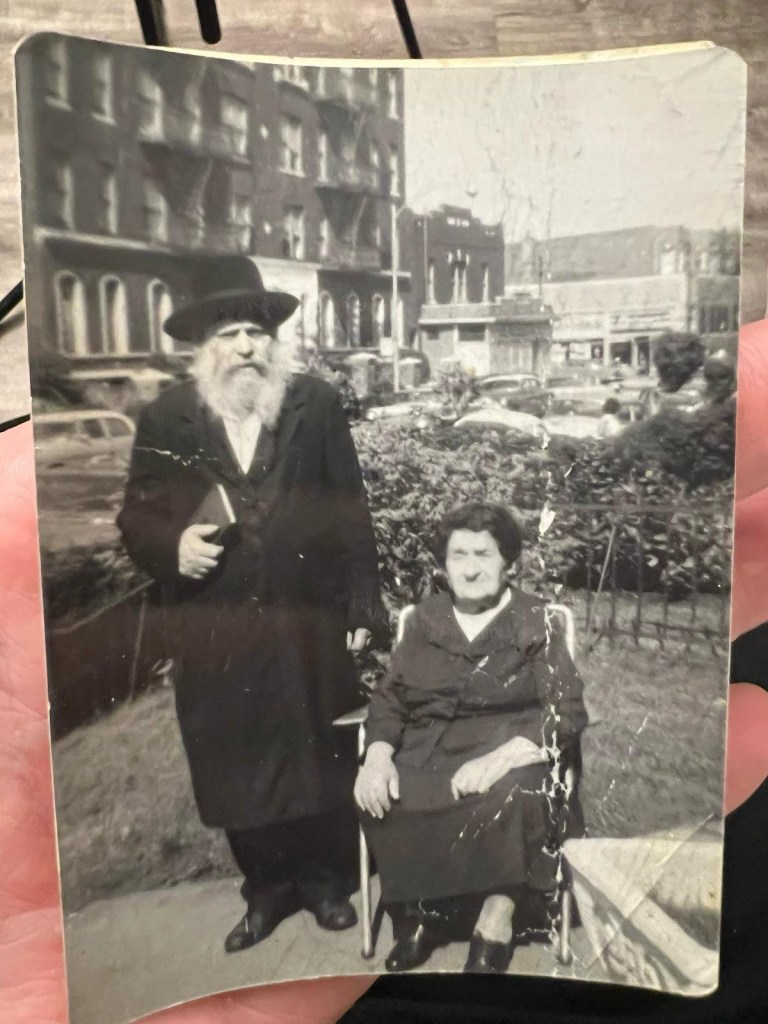

William Kowitt was an honest man—what they called a “straight shooter” in those days—a kind and helpful individual who was well respected in the neighborhood. At the time, pharmacies were as common as corner stores, with one on almost every block. Stanley recalls his father bandaging customers who came in with minor injuries and removing cinders from their eyes. In many ways, the pharmacy functioned as a mini-clinic for the neighborhood.
Stanley recalls that at one point, an orthodox delegation of newcomers to the neighborhood approached Stanley’s father, asking him to close the store on Shabbos, but William Kowitt declined. This was a common occurrence in Jewish neighborhoods of the time, as haimish families moving into established secular American-Jewish neighborhoods often encouraged businesses to observe Shabbos to various levels of success.
On President Street, comedian Sam Levinson lived nearby. Levinson was a customer of Kowitt Pharmacy and even gave Stanley an autographed book for his Bar Mitzvah.
In 1956 or 1957, William Kowitt sold the pharmacy and opened a new one in another Brooklyn neighborhood, where the family relocated. Around this time, the pharmacy was sold to Mrs. Glasser (or Glayzer), who also owned a drugstore on Carroll and Kingston. Later, it was owned by Mr. Kaplan and Shabsi Rubin.
In 1990 the pharmacy was purchased by the beloved Crown Heights family Shloime and Linda Gutleizer renaming it Apple Drugs and marking a new era of community memories.
Note: As we prepare these articles and the book on the history of Crown Heights, we kindly request anyone with pictures or stories to share them with us. There are so few images of Crown Heights from the past that any and all contributions would be greatly appreciated. Whether recent or from way back when, each photo holds a unique piece of the story, and we are eager to collect and explore them. Your help will enrich this project and help preserve the history of this vibrant neighborhood.
All rights reserved. For permission questions and comments: HistoryofCrownHeights@gmail.com


Stanly Kowitt interview
376 Kingston Ave (1934–1957)**
Owned by William and Harry Kowitt.
The family’s original surname was *Itzkowitz*, and they were second cousins to Eddie Cantor.
Stanley Kowitt was born in 1938 in Crown Heights. He lived on the second floor of 1324 Carroll Street. As a child, he played hide-and-seek on every block. In those days, kids played sports in the streets, dodging cars as they went by. Crown Street houses were just beginning to be converted into shuls. Crown Heights was a terrific, friendly neighborhood. Stanley would be out all day, and his mother didn’t worry about him. It was a very safe neighborhood. Life was simple back then—before computers and modern distractions—a completely different world. He attended PS 161. In those days, Jews typically married other Jews.
Stanley’s father’s business, Kowitt Pharmacy, was located at 367 Kingston Avenue. Right across the street, on the corner, was a beauty parlor where Stanley played ball and even once broke a window. Across the street was a candy store. Stanley delivered prescriptions for his father and could earn a tip of up to 10 cents.
The pharmacy stretched straight to the back, and to the left at the extension property was a soda fountain with a long counter from which you could look out at Crown Street.The soda fountain sold ice cream sodas and small items, as soda fountains were common in pharmacies at the time. Later, the soda fountain was rented out to an optometrist.
Stanley’s father, William, and his uncle, Harry, owned two drugstores, including one on Fulton Street. His father was born in Manhattan, and his mother came over from England as a baby. William was an honest man, what they called a “straight shooter” in those days, a helpful kind man, and was well respected in the neighborhood.
Eastern Parkway was the main place for Crown heights people to meet people on shabbaos. The only time Stanely would go to Eastern Parkway was on Yom Kippur, looking to talk to girls. Some people fasted on Yom Kippur.
The Brooklyn Jewish Center often featured the renowned cantor Richard Tucker. Eastern Parkway would be flooded with people during holidays, and megaphones were used so everyone could hear the davening (services).
Stanley attended Hebrew school five days a week. His teachers were Mr. Shpall and Mr. Edelheit. He had his Bar Mitzvah in 1951 at the Brooklyn Jewish Center. His father had to become a member of the center for Stanley to celebrate the event there. They were secular American Jews, but Stanley thought the whole world was Jewish, like his neighborhood. The family only attended synagogue once a year. As Stanley said, “We did what we could.”
In those days, there was a pharmacy on almost every corner. In the late 1950s, Kowitt Pharmacy was sold to a woman pharmacist named Gasser (or Glayzer), who owned a drugstore at the corner of Carroll and Kingston. Her store was called Gasser’s Pharmacy, and she bought Stanley’s father’s store in the mid to late 1950s.
One day, a committee of Orthodox Jews from the neighborhood came to Stanley’s father and demanded he close on Saturdays instead of Sundays (the store was open six days a week). They were not happy when he refused.
Stanley remembers seeing his father, over the years, bandaging many people who came into the store bleeding from various accidents and even taking cinders out of people’s eyes by turning back their eyelids. In a small way, it was like a free mini-clinic.
Empire Boulevard and Schenectady Avenue had the biggest drugstore in the area. Known as Jacobs Pharmacy, it also served as a wholesaler for medicine.
On President Street, comedian Sam Levinson lived nearby. Sam Levinson was a customer of Stanley’s father and gave him an autographed copy of one of his books for his Bar Mitzvah. He also gave Stanley an autograph book as a Bar Mitzvah gift. Stanley and his close friends, who lived next door, often played ball and broke windows in the courtyard of their Carroll Street building.
Stanley’s father sold Kowitt Pharmacy in 1956 or 1957 and opened another pharmacy in a different Brooklyn neighborhood, where the family moved. At that time, the family lived at 134 Finimore.
While attending Brooklyn College’s pharmacy school, Stanley, along with his friends, created a humorous fake fraternity called *ZEL* (*Zaideh Ate a Latkah*) and hosted parties every Friday night. That’s how he met his wife of 63 years, who also attended Brooklyn College and was originally from Borough Park. Stanley attended Erasmus Hall High School on Flatbush Avenue and Church Avenue




Leave a comment