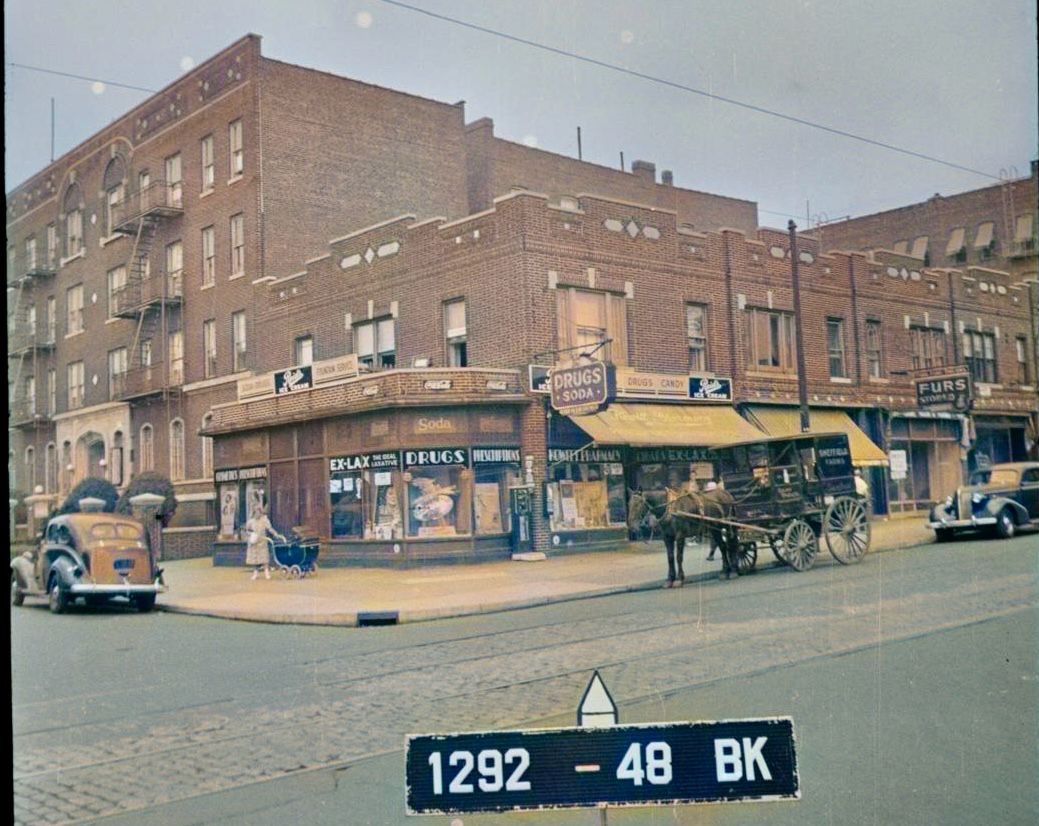


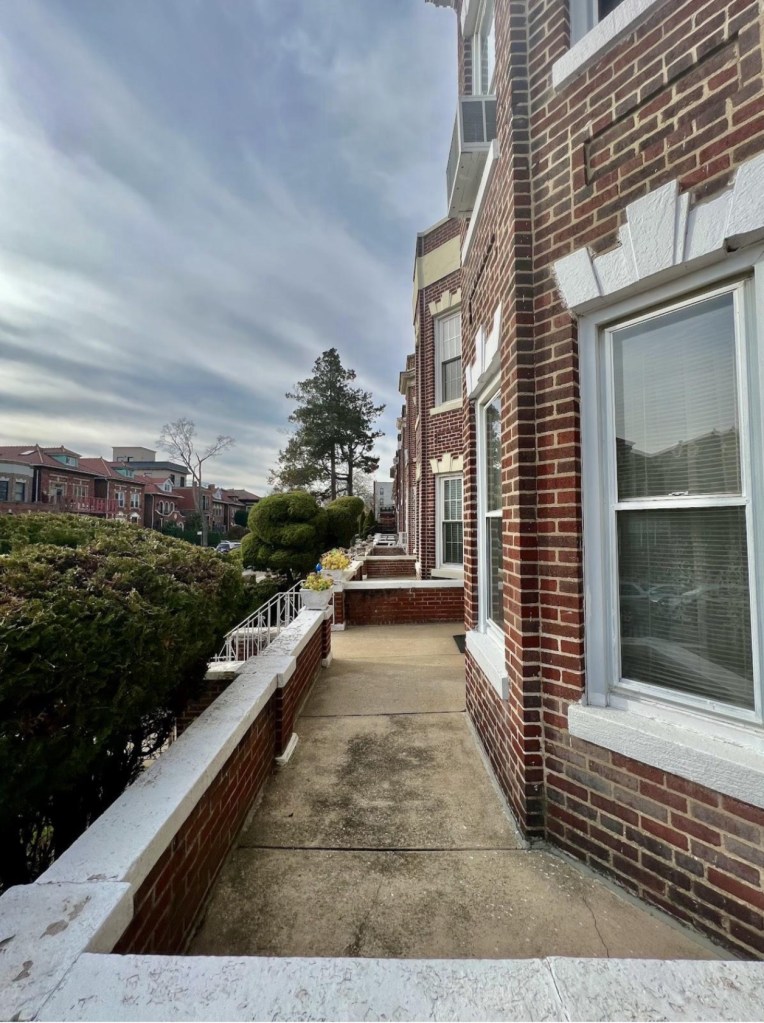
Walking down the streets of Crown Heights, you’ll notice a variety of row house styles. Beautiful, somewhat original designs can be found along Union St, President St, and Carroll St, with Crown Street being the last block built with diverse architecture. By the time developers reached Montgomery Street, they had constructed the entire stretch with a unified brick design. This is why walking down Montgomery Street, you might not be struck by the architecture as you are on other blocks. The architecture lacks the storytelling quality found in other parts of the neighborhood.
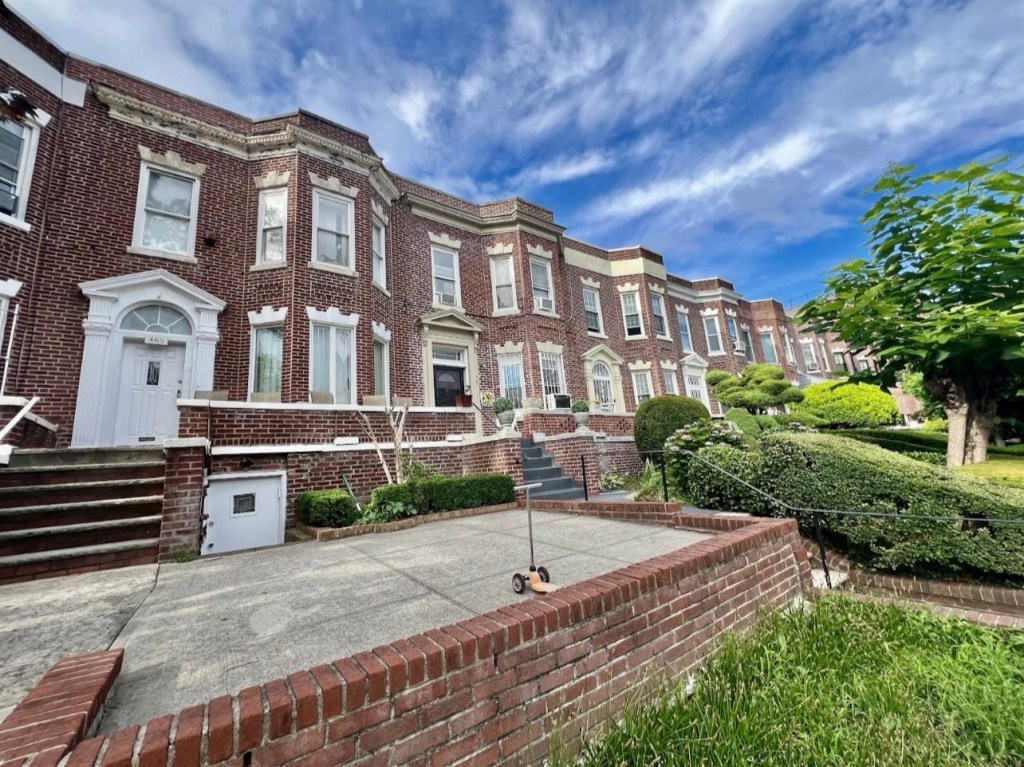

Houses at 461-479 Crown Street, near Kingston Avenue, stand out for their simplicity, their developer, and their incongruity with the overall neighborhood story. They don’t quite fit the character of the neighborhood.
Development in Crown Heights began in 1898, with Crown Street being “improved” starting in 1916. Improvements included roads, sidewalks, water, sewer, and electric lines. Unlike today, developers were responsible for these improvements.
These ten houses on Crown Street were built in 1920 by the “Owner and Builder” Isador H. Meyer. Aside from this project, little else is known about his work. Strauss lived with his family at 465 Crown Street, possibly indicating the time it took to sell the homes or the need to be on-site to show them repeatedly. Despite heavy newspaper advertising, a mortgage rate of 5.5%, and a $5,000 tax exemption, it took over a year to sell all ten houses, even with a nearby subway line.
From 1903 onward, Crown Heights saw many developers. Leading the way were Frederick Rowe and Henry Roth, along with M.F. Gleason, who built spacious apartment buildings on Eastern Parkway, and J.K. Cole, who made his mark on Union Street. Charles Goell, commemorated on the corner of Carroll and Albany, developed “Colonial revival style beautiful red brick homes with a Flemish look.” Each developer contributed their unique architectural vision to the neighborhood. In contrast, Isador Meyer focused on quickly building and selling these simpler houses, which perhaps explains their basic design and lack of fit with the rest of Crown Heights.

The advertisements for these houses made semi-true claims, such as “Overlooking all of Flatbush” (true until more buildings went up across the street) and promised a “restricted block with no apartment buildings,” even though an apartment building was planned for later that year.
Isador H. Meyer, after living at 465 Crown Street, eventually moved to 1230 Dean Street. During the Great Depression, he advertised his house for trade for a farm in Connecticut. Meyer, a member of the Reform synagogue on Eastern Parkway, was of German Jewish descent. The “South Portland Construction Company,” a New York-based company, was dissolved right after the sale of the final houses, suggesting it was possibly created just for this project.
Frederick Rowe had already built similar houses on the corner of President Street and Troy in 1914, calling them “Splendid Houses for the Family of Moderate Means.” Rowe’s vision was for all of Crown Heights to resemble President Street, making it curious why he built these more modest houses. It’s possible they were both using a standard design.
In 1923, 465 Crown Street was purchased by the Haft family, Max and Jennie Haft, who were beloved community members involved in numerous Jewish charities. Before government programs, charities played a significant role in serving the needy, and being involved in many charities was a point of honor. In 1923, Max’s son Abraham Haft married Thelma Prensky, who grew up at 1445 Union Street. This match was notable because it united two respected families deeply involved in charity. Despite the Haft family’s more modest means, their reputation for philanthropy made this union significant in the community.
The Standard Union, Saturday, August 28, 1920 advertising single family homes for sale “overlooking all Flatbush”.
The Brooklyn Daily Mail July 25, 1920.
I. H. Meyer joins the group called the “Crown Street Developers” in an attempt to sell the rest of the houses. On the right they were advertising detached two-family houses across the street and on the left was the row of 461-479 Crown. Note the area was still being referred to as “Eastern Parkway Section”.
The Brooklyn Daily Eagle, February 1921
Note it says: “Restricted block no apartments” even though the apartment building at the corner was planned for October that year.
The Brooklyn Citizen, Friday, October 07, 1921
Announcing the dissolution of the company South Portland Construction Company.
Ad mentioning the $5,000 tax exemption.
Brooklyn Daily Eagle October 1920. What’s the meaning of a “Coal in each cellar”?
Brooklyn Daily Eagle May 1914 advertising identical homes on President and Troy built by Frederick Rowe
Max H Haft passing in the newspaper.
Brooklyn Daily, May 5th 1923. The Haft- Prentzky Wedding in the Oholei Torah hall. A 300 person wedding back then was the equivalent of a 5000 person wedding today. At least!
Newspaper announcing the life and Legacy of Max Haft
Newspaper announcing the life and Legacy of Misses Haft OH. Oddly her first name is never mentioned.Newspaper announcing the life and Legacy of Abraham Hafts Mr Prensky’s shver
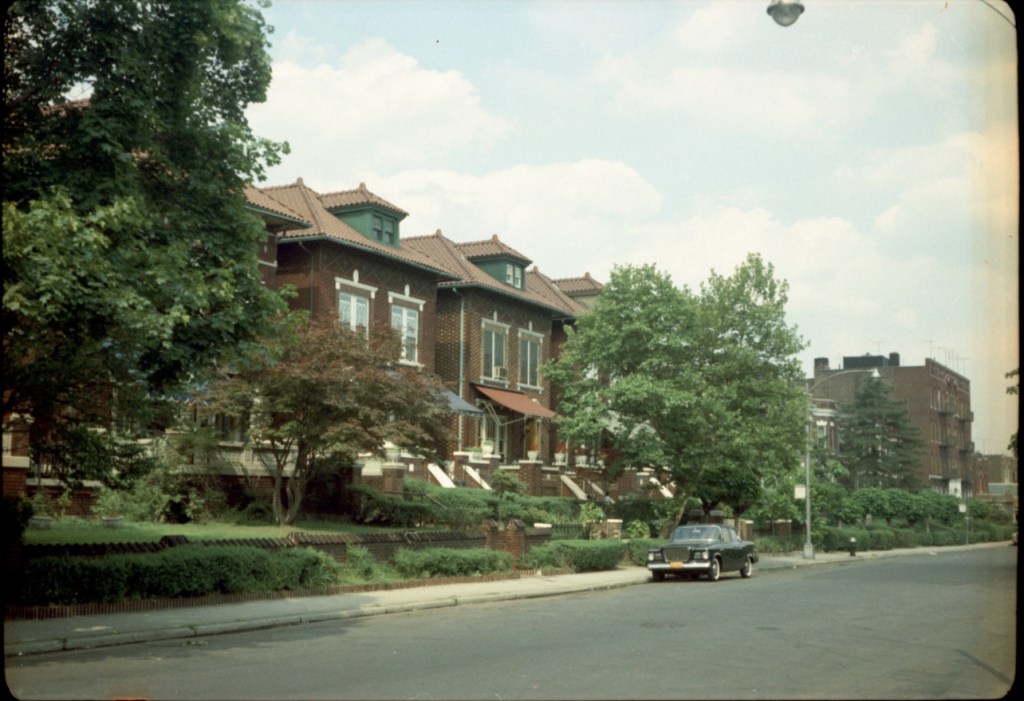


 History of Crown Heights
Leave a comment